Report date: October 2026 / Contact: Laura
Under the Northwest Power Act of 1980, the Council represents Idaho, Oregon, Washington, and Montana in developing a 20-year power plan for the Pacific Northwest, which it reviews and updates within five years of adoption. These power plans assure the Northwest of an adequate, efficient, economical, and reliable power supply. Over the past two decades, collaborative work by the Council, the Regional Technical Forum, BPA, regional utilities, and other partners have delivered a major success in power planning for the Northwest’s electricity grid. Regional power costs have been among the lowest in the U.S., while power supply shortages have been extremely rare. Acquiring cost-effective energy efficiency has played a major role in this success story.
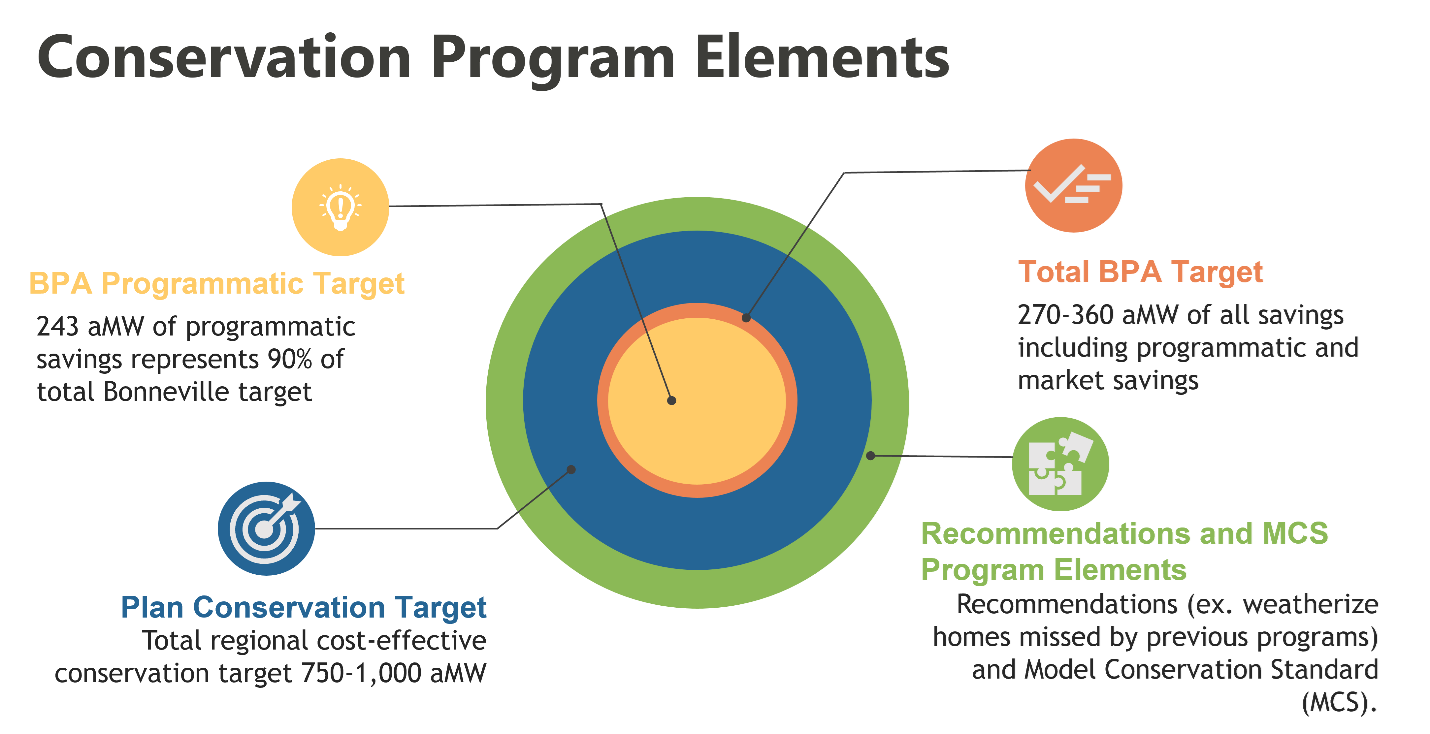
In its charter, the Regional Technical Forum is tasked with annually surveying the region’s utilities, Bonneville Power Administration, Northwest Energy Efficiency Alliance (NEEA), and system benefit charge administrators like Energy Trust of Oregon on their efficiency achievements. The RTF supports the compiling of the data into a Regional Conservation Progress (RCP) report, and staff present it to the Council to offer a full picture of the region’s progress against the power plan’s efficiency targets. The Council in its 2021 Power Plan included a conservation program with multiple elements, including a target range for cost-effective conservation of 750-1,000 aMW for the region within the six-year plan period. The graphic shows some of the high-level details of the 2021 Plan’s Conservation Program and for the region to complete the Conservation Program in the Plan will be completing all of these elements. The 2025 RCP is the fourth-year tracking to the 2021 Plan.
Cumulative Achievements and the 2021 Plan
2025 RCP Workbook Presentation submitted to the Council
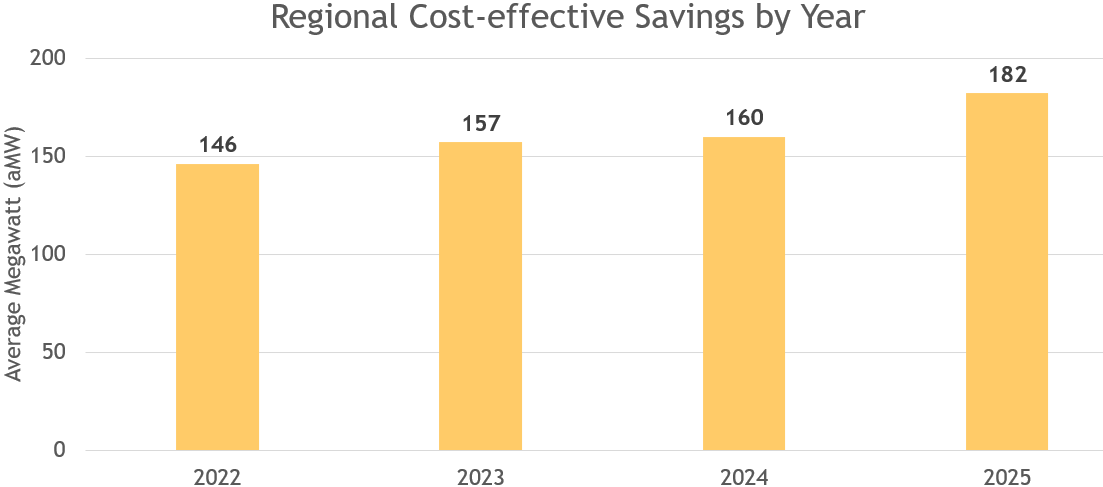
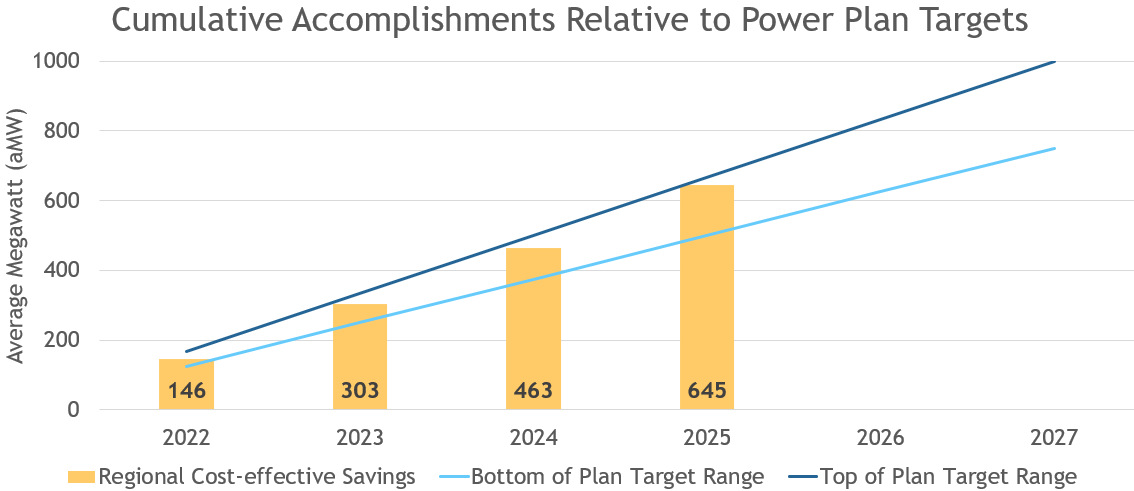
The Northwest as a region achieved 182 aMW of energy savings due to conservation measures. This total savings is representative of Bonneville Power Administration and utility program savings, NEEA reported savings, and savings from codes and standards. The chart to the right illustrates how the regional savings compare to the bottom and top of the Plan target range. As shown in the chart, the region is on track to exceed the low end of the Council's 2021 Power Plan target range to ensure an adequate, efficient, economical, and reliable power supply.
Energy efficiency reduces energy demand, while also lowering costs for consumers. Over the past several decades, the Council’s analysis has consistently shown that energy efficiency is a more cost-effective option to meet electricity demand than building new power plants.
Regional Savings by Sector and End Use
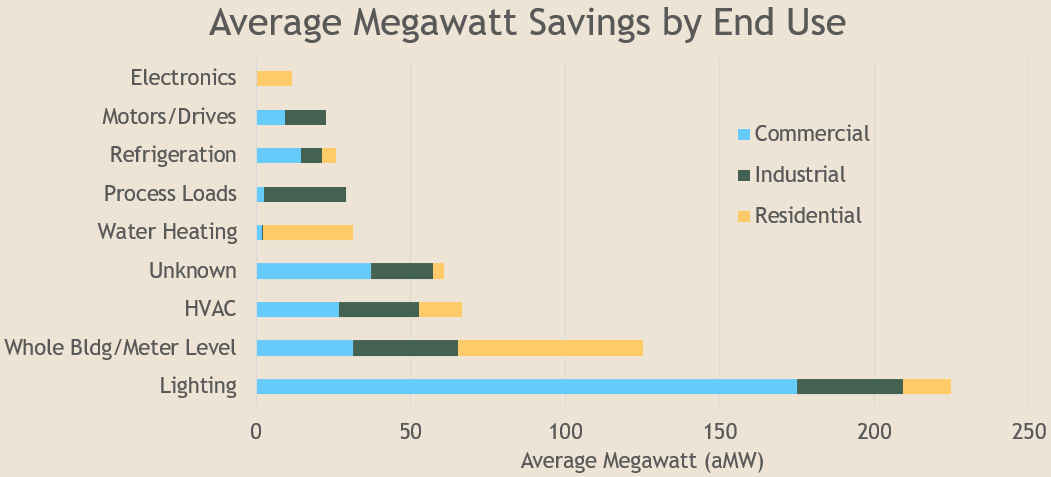
From 2022-2025, 52% of the cost-effective savings achieved by programs in the region have come from the commercial sector. The industrial sector represents 30% of the regional savings followed by 15% from residential. Lighting, whole buildings, and HVAC are the top end uses in each of these sectors as shown in the graph.
Trends in Program Savings Over Time

Residential Lighting
Seeing the expected steady decrease in residential lighting savings as steady energy efficiency program work over the past 20 years have captured the savings from this end use and transformed the market

Commercial Sector
Commercial lighting savings representing a large portion of both commercial sector and total regional savings but need for new programs as lighting opportunities expected to diminish.
NEEA paving the way for new commercial motor and drives programs in the future.
New Industrial Programs
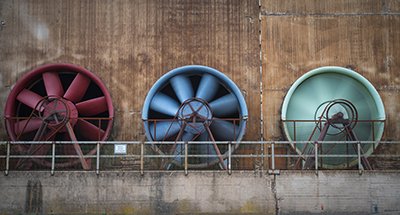
Seeing the emergence of new programs for fans and pumps, including the first fan program savings in the RCP from BPA.

Short Measure Life
Seeing an increase in programs with short measure lives (1-2 years), which has the potential for utilities to claim savings multiple times at the same location. This in turn has the potential to overstate savings relative to the Plan target. Staff continues to work with the region to understand the long-term resource and may adjust savings accordingly.
NEEA Savings
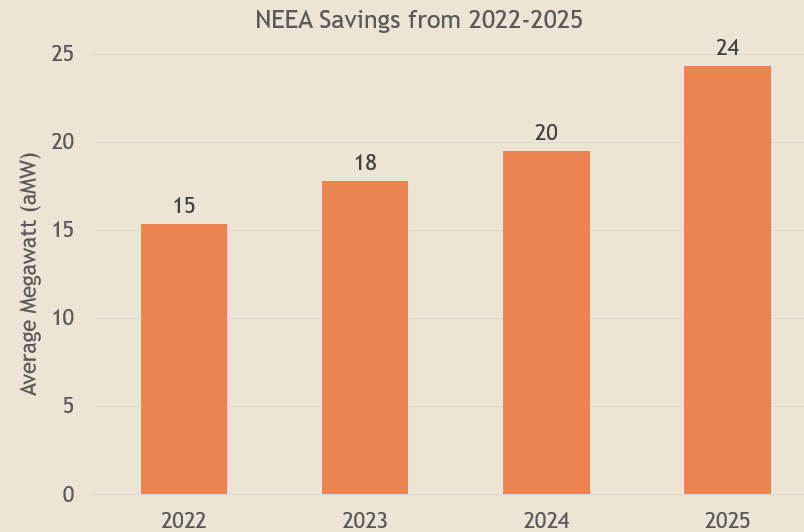
The Northwest Energy Efficiency Alliance is continuing to provide value to the region toward achieving conservation, through both its market transformation initiatives and codes and standards work. In 2025, NEEA achieved 24 aMW of savings, a 16 percent increase compared to the previous year.
Other Regional Savings Achieved
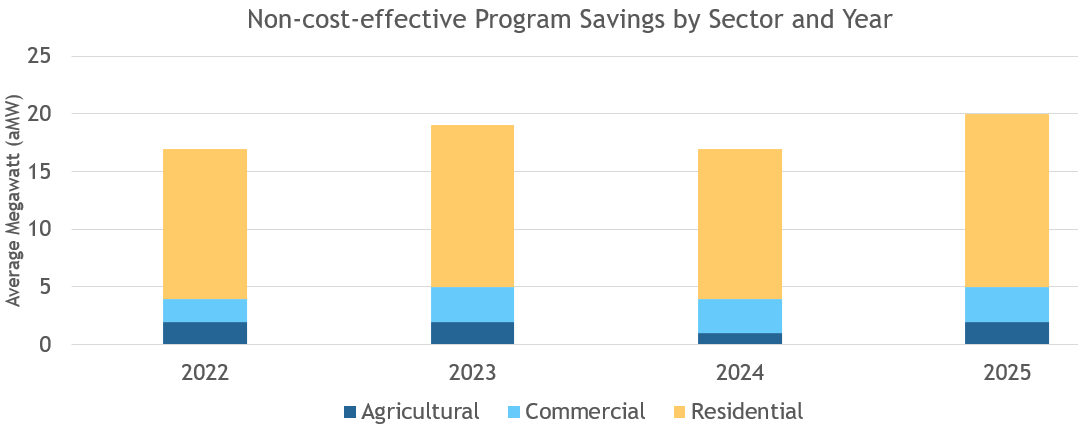
The Plan recommended that programs focus on cost-effective energy efficiency first and as we have seen there continues to be opportunities for programs in these areas. That said, the Plan also recognized that there were additional goals, customers, and markets that the region may need to pursue non cost-effective measures to continue to support that were detailed in other elements of the Conservation Program. The Plan detailed three additional areas for program to focus once they have gotten all the available cost-effective energy efficiency, including continued investment in weatherization programs, ensure customers in small and rural markets have program opportunities in residential and agricultural programs, and for jurisdictions required to pursue decarbonization that they do so efficiently. The region achieved 20 aMW in additional savings in 2025.
Historical Regional Savings
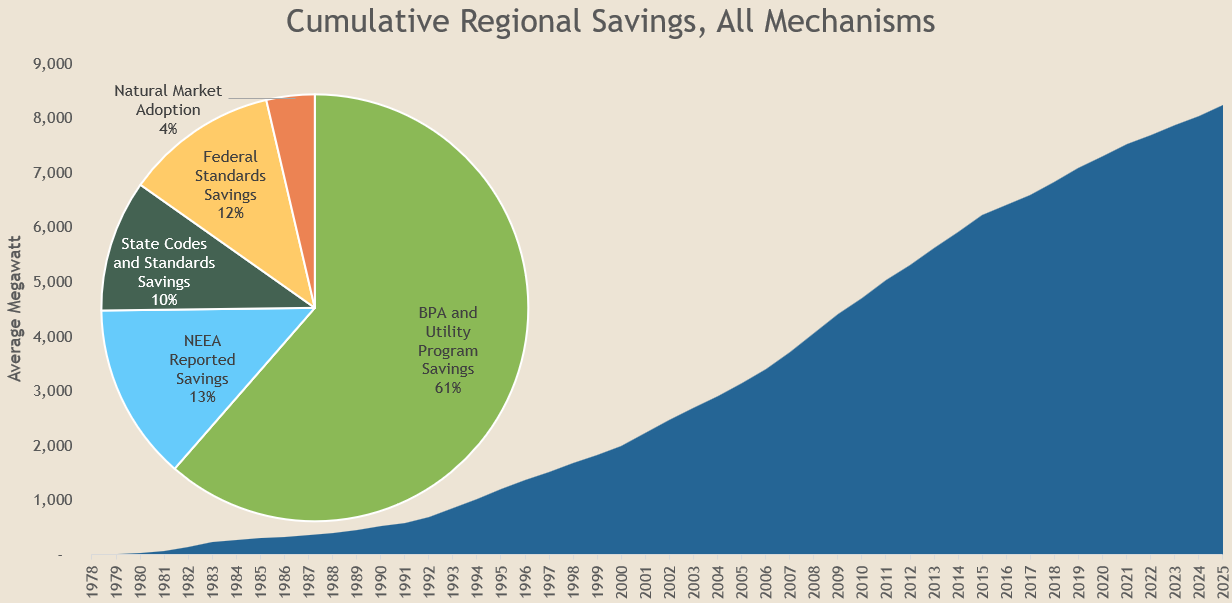
Over the past 45 years, the Northwest has saved 8,247 aMW by acquiring cost-effective energy efficiency called for in the Council’s power plans. To put that in perspective, this is equivalent to the annual electricity usage of 5.9 million Northwest homes. Put another way, 8,247 aMW is approximately four times the average annual output of the Northwest’s largest electricity generating resource, Grand Coulee Dam.
When measured by average annual output, energy efficiency is the second-largest resource on the Northwest’s electricity grid behind hydropower. That has also resulted in over $7.9 billion in avoided energy costs in the Northwest and energy efficiency has met more than half of the region’s load growth since 1980.