

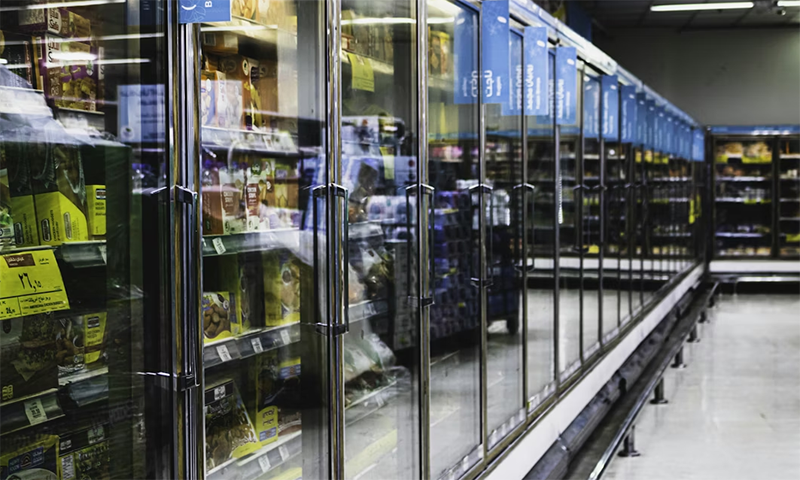
In 2022, the RTF contracted DNV to perform a study to understand the potential impacts of low global warming potential (GWP) refrigerants on energy efficiency. The work was completed through a series of three tasks, including:
- Summarize the federal and state requirements, with a focus on the Council states of Idaho, Montana, Washington, and Oregon, on production and consumption of high-GWP hydrofluorocarbons (HFCs)
- Based on application, summarize the potential alternative low GWP refrigerant options in the market
- Quantify the impact of the identified alternative refrigerants on equipment’s energy performance
Overall, the study found that the American Innovation and Manufacturing (AIM) Act is the overarching federal regulation in place, but this does not necessarily meet the needs of OEMs, end users, and environmental groups who are asking for a uniform federal framework, such as the US Environmental Protection Agency (EPA)’s Significant New Alternatives Policy (SNAP) 20 and 21 frameworks. While uptake of the law varies across the US, in the Pacific Northwest, Washington has enacted the law, and Oregon was expressing interest in pursuing the laws. Regarding alternative refrigerants, the study identified many low GWP alternatives to HFCs currently in the market, but these either require a completely new system, have flammability or toxicity concerns, or have potentially high capital costs. In most cases, alternative refrigerants offer improvements in energy efficiency but also tend to have lower capacities than HFCs.
Final Study Documentation
- State and Federal Requirements Memo (Oct 2022)
- HFCs and Alternative Refrigerants (Nov 2022)
- Impact of Alternative Refrigerants on Equipment Performance (Dec 2022)
- Presentation to RTF (Jan 2023)